Understanding Torque, RPM, and Power
Torque, RPM, and power explained: what they mean, the math that links them (hp = torque*RPM/5252), and how gearing shapes real-world performance.
Core Definitions
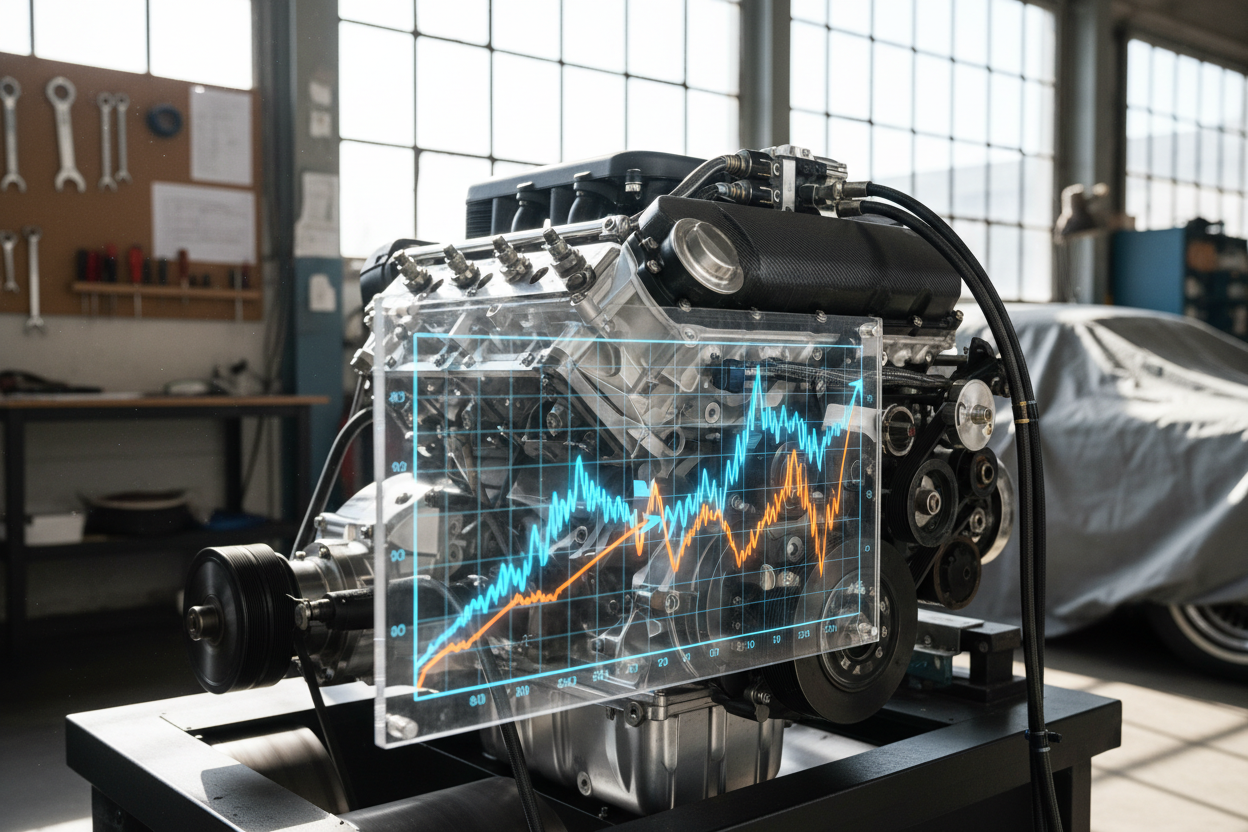
Understanding the trio of torque, RPM, and power is essential for anyone working with motors. Torque is the twisting effort that causes rotation, measured in units like newton meters, and it indicates how strongly a motor can turn a shaft. RPM stands for revolutions per minute and describes how fast that shaft spins. Power is the rate of doing work, capturing how quickly the motor can convert electrical or chemical energy into mechanical output. A motor that delivers high torque at low speed may feel strong but not necessarily fast, while a high RPM motor can spin quickly yet struggle to move heavy loads without help from gearing. In practice, you will encounter concepts like stall torque (maximum torque at zero speed), continuous torque (what the motor can sustain thermally), and peak torque (short bursts). Bringing these ideas together lets you match a motor to real-world tasks, from lifting, pumping, and conveying to accelerating vehicles and precise motion control.
The Math Behind the Relationship
The link between torque, RPM, and power is elegantly simple and profoundly useful. Mechanical power equals torque times angular speed: P = τ × ω. Because RPM is revolutions per minute and ω is radians per second, you convert with ω = 2π × RPM ÷ 60. Put together, P = τ × 2π × RPM ÷ 60. This formula explains why moderate torque at high RPM can produce significant power, and why low-speed, high-torque machines can feel immensely strong. For a quick example, 50 newton meters at 3000 RPM yields roughly 15.7 kilowatts. In many contexts, people reference horsepower, which is just another unit of power; converting between units keeps comparisons honest. Remember that rated values often distinguish continuous versus peak operation, and that real systems lose some energy to heat and friction. Grasping this math helps you predict performance, size components, and anticipate how load changes will affect speed and output.
Torque and Power Curves
Real motors do not deliver the same torque at every speed. Internal combustion engines often produce a rising torque curve that peaks midrange, while electric motors commonly offer a broad constant-torque region followed by a constant-power region at higher RPM. In the constant-torque zone, current limits or magnetic saturation cap torque, so power climbs linearly with speed. Past a certain point, field weakening or back electromotive force limits current, so the motor maintains roughly constant power while torque tapers off. Manufacturers publish curves that show torque, power, and efficiency versus speed; these charts are invaluable when matching a motor to a load profile. Pay attention to thermal limits, because continuous ratings are governed by heat dissipation, not just electromagnetic capability. Distinguish peak ratings, which you can use for brief accelerations, from continuous ratings for steady operation. Understanding these curves helps you predict acceleration, holding capability, and how long a system can sustain demanding duty cycles without overheating.
Gearing, Load, and Driveability
Transmission choices turn raw motor output into usable work. A gear reduction multiplies torque at the output shaft by the gear ratio times efficiency, while reducing RPM by the same ratio. This is why small, high-speed motors can move heavy loads when paired with appropriate gearing. Different loads impose distinct torque-speed demands: fans and pumps often require torque that rises with the square of speed, conveyors tend to need nearly constant torque, and machine tools may alternate between high torque at low speed and lighter torque at high speed. These characteristics dictate where on the motor curve you must operate. Good driveability means choosing ratios and control strategies that keep operation within efficient, thermally safe regions. Consider inertia and acceleration too: large inertial loads need extra torque to ramp speed without overshoot, and braking energy may need to be dissipated or recovered. Proper gearing and control transform raw power into smooth, reliable, and efficient performance.
Choosing and Using Metrics
Selecting the right motor is about more than chasing the biggest power number. Start by defining load type, required torque at key speeds, duty cycle, ambient conditions, and allowable temperature rise. Look at continuous ratings for sustained tasks and peak capability for brief transients, then ensure the controller and power supply can deliver the needed current. Measurement methods matter: dynamometers characterize torque across speed, while electrical constants like torque constant and back EMF constant help estimate performance in electric motors. Beware of marketing figures that emphasize stall torque without context, or report RPM with no load attached. Convert units consistently, account for drivetrain efficiency, and include safety margin for aging, friction changes, and unforeseen overloads. Finally, decide on control mode: torque control excels at regulating force, speed control holds RPM under varying loads, and power control balances thermal and energy limits. A disciplined, metric-driven approach yields reliable, efficient motion solutions.