Starter Methods: Soft Starters vs Across-the-Line
Compare soft starters and across-the-line methods: how they start motors, impact torque, current, cost, and when each is the right choice.
Fundamentals of Motor Starter Methods
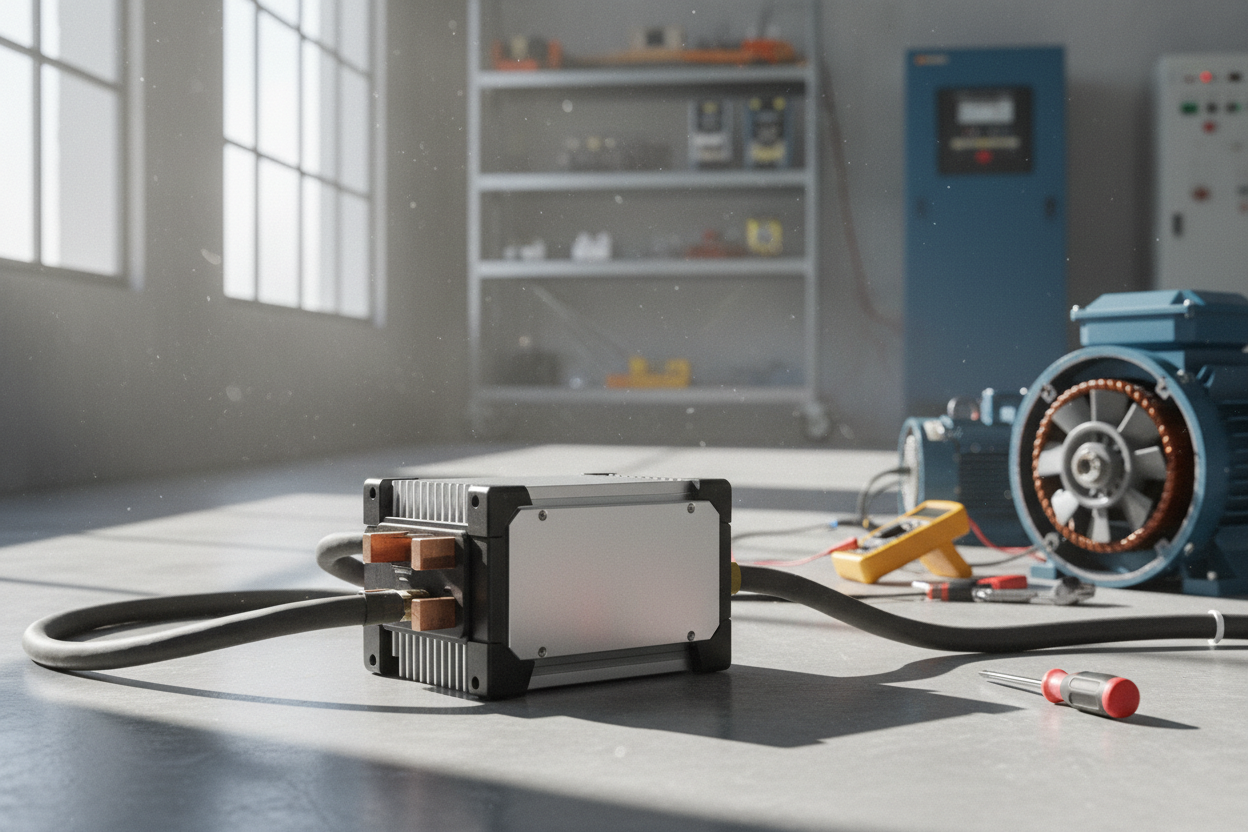
Choosing the right method to start an electric motor shapes performance, reliability, and cost. The two common approaches are soft starters and across-the-line (also called direct-on-line) starters. Across-the-line energizes the motor at full line voltage instantly, producing maximum starting torque and significant inrush current. It is simple, rugged, and economical, especially for smaller motors or systems tolerant of electrical and mechanical stress. A soft starter applies a controlled voltage ramp to limit inrush current and progressively increase torque, enabling gentler acceleration. This reduces voltage dips on the supply and mitigates stress on couplings, belts, gearboxes, and driven equipment. Soft starters often include features such as current limit, kick-start, and bypass contactor control to reduce heat after ramp-up. While both methods ultimately bring the motor to full speed, the journey matters: the choice affects process stability, maintenance intervals, and the power network. Understanding application demands is the first step toward a balanced, dependable starting strategy.
Electrical Behavior at Start
Electrically, the key difference centers on inrush current and its impact on the power system. An across-the-line start can draw several multiples of full-load current, causing brief voltage dips that may dim lighting, trip sensitive equipment, or breach utility limitations. Protective devices must be coordinated to withstand this transient without nuisance tripping. In contrast, a soft starter moderates voltage and current during the ramp, keeping starting current within a predefined current limit, often drastically reducing the disturbance to upstream feeders and transformers. This controlled approach improves power quality and supports tighter compliance with site thresholds. It also allows fine-tuning of acceleration time, starting torque, and initial movement for loads that need gentle engagement. However, soft starters still rely on the supply frequency; they do not change speed like variable frequency drives. After reaching synchronous speed, many designs use a bypass path to minimize losses and heat, blending control with efficiency and protection.
Mechanical and Process Effects
Mechanical consequences can be just as important as electrical behavior. With across-the-line starting, the abrupt torque step may magnify mechanical stress, increasing wear on couplings, sprockets, shafts, and seals. Systems with high inertia or fragile components can experience shock, vibration, and potential misalignment. For pumps and pipelines, full-voltage starts may escalate water hammer and pressure surges. A soft starter limits these effects by shaping the torque profile and providing smooth acceleration, reducing slip-stick behavior and mechanical backlash. Gentle start and stop functions can protect belts and gearboxes, improve conveyor tracking, and minimize product spillage. Adjustable ramp-up and ramp-down times help synchronize with process requirements, such as gradually filling a pipeline or bringing a fan to speed without surging airflow. Features like kick-start can overcome static friction in tight or sticky loads without resorting to harsh torque. Overall, a soft starter promotes process stability, reduces downtime from mechanical issues, and can extend the life of both the motor and driven equipment.
Energy, Heat, and Efficiency Considerations
Energy use during steady-state operation is dominated by the motor and the load, not the starter. A soft starter does not by itself provide continuous energy savings like a variable frequency drive, because it does not change operating speed; it governs only the starting phase. That said, by reducing inrush current and torque shocks, a soft starter can lower thermal stress on the motor windings, potentially decreasing insulation fatigue and extending service life. During ramp-up, losses are present in the starter's power electronics, and continuous inline operation can add heat. Many designs use a bypass contactor at full speed to reduce these losses and improve efficiency. In contrast, across-the-line starters add minimal running losses but impose higher starting heating on the motor. When starts are frequent, the thermal profile matters: controlled starts help keep temperature rise in check, support tighter duty cycles, and may enable smaller enclosures or simpler cooling strategies in space-constrained installations.
Selection and Sizing Guidelines
Selecting between soft starters and across-the-line requires a clear view of the load profile, supply constraints, and process needs. Centrifugal pumps and fans typically benefit from controlled acceleration, while crushers, mixers, or high-inertia machines may demand robust starting torque and careful current limiting. Evaluate available short-circuit capacity, transformer impedance, and permissible voltage sag to ensure compatibility with the electrical system. Check service factor, motor ratings, and wiring to avoid excessive heating during start. For soft starters, size for required current limit, ramp times, ambient conditions, and enclosure type; consider bypass to reduce thermal load at speed. Also weigh integrated protections, such as overcurrent, stall detection, phase loss, and overtemperature. Control interfaces—discrete I/O, analog inputs, or simple communications—should align with the plant's control philosophy. Finally, account for total cost of ownership: include installation, commissioning, mechanical wear, downtime risk, and future scalability, not just the initial purchase price.
Practical Choices and Application Examples
Use across-the-line where the system tolerates electrical and mechanical transients, starts are infrequent, and simplicity is paramount—such as small workshop tools, rugged conveyors, or compact motors on resilient loads. Choose a soft starter when you need to limit inrush current, preserve power quality, or protect sensitive mechanisms—common in pumping stations, HVAC supply fans, or material handling with delicate products. In brownfield sites with tight transformer capacity, soft starters can enable additional loads without upgrades. During installation, verify motor lead sizing, grounding, and protective device coordination. Set ramp-up, current limit, and stop modes through measured trials, observing acceleration time, line voltage stability, and mechanical response. Confirm proper bypass operation to minimize heat at full speed. For maintenance, inspect terminations, ventilation, and heat sinks on soft starters, and monitor contact wear on electromechanical starters. With a methodical approach, you can balance process needs, electrical limits, and equipment longevity to select the right starting strategy.