Noise Cancelling Headphones Explained: What to Look For
Discover how ANC works and what matters: mic arrays, feedforward vs. feedback, codecs, comfort, battery life, transparency modes, and fit.
How ANC Works
Active noise cancelling headphones combine passive isolation and active noise cancellation (ANC) to reduce unwanted sound. Passive isolation comes from the physical seal of ear pads or tips that blocks external noise, while ANC uses microphones to capture ambient sound and a signal processor to create an inverse waveform, reducing low, steady noises through destructive interference. This approach is most effective against droning engines, HVAC hum, and rumble; it is less effective with irregular sounds like speech or clacking keyboards. A good acoustic seal is essential: over‑ear models rely on plush pads and clamping force, while in‑ear models use silicone or foam tips to fill the canal. Poor fit weakens bass and cancellation, so experimenting with sizes matters. Many models add transparency mode to reintroduce outside sound for awareness, and some include adjustable ANC levels. Expect subtle ear‑pressure sensation with strong ANC—well‑tuned designs minimize this. Understanding these fundamentals helps you judge real‑world performance beyond marketing claims.
ANC Designs Compared
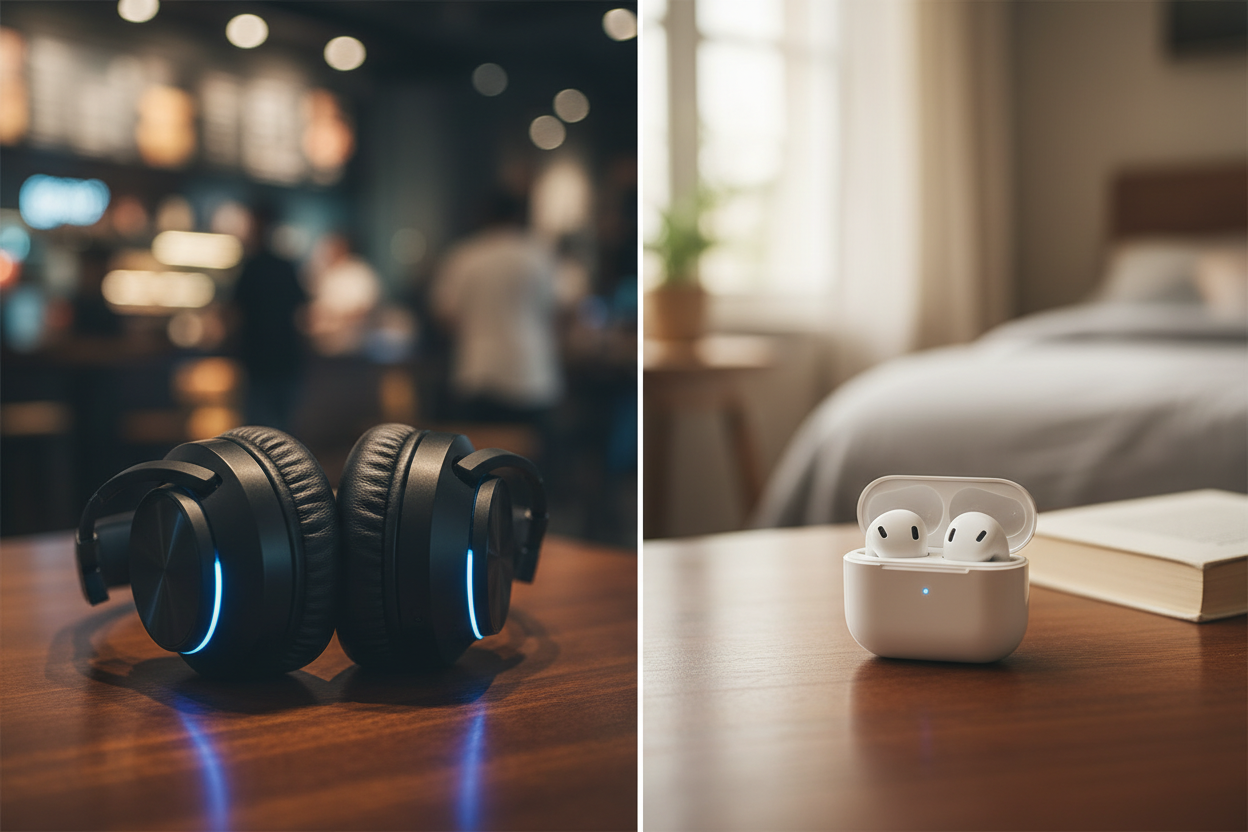
There are three primary ANC architectures: feedforward, feedback, and hybrid. Feedforward places microphones on the outside of the ear cup or shell, capturing noise early but sometimes struggling with wind noise. Feedback uses microphones inside the ear to measure what you actually hear, enabling precise correction but risking audible artifacts if the seal shifts. Hybrid ANC combines both to broaden effectiveness across frequencies and fit variations. Implementation quality matters as much as design: mic placement, DSP tuning, and the ear cup's acoustic chamber shape the result. Over‑ear headphones typically deliver stronger low‑frequency cancellation, while true wireless in‑ear models can excel with the right tips and venting to manage pressure. Adjustable ANC levels and adaptive modes tailor cancellation to your environment, but aggressive settings can introduce hiss or tonal shifts. Look for wind‑reduction profiles, stable performance when you chew or talk, and smooth transitions between ANC and transparency. The best designs balance isolation, natural sound, and comfort.
Sound Quality Factors
Noise cancelling is only part of the story—great headphones also deliver compelling sound quality. Driver type and size matter less than overall tuning, enclosure design, and digital signal processing. Aim for a balanced frequency response with clean bass, articulate mids, and detailed but controlled treble. Strong ANC can subtly alter tonal balance, so evaluate with ANC on and off. Built‑in EQ lets you tailor sound without overboosting, and a custom profile can compensate for fit or personal preference. Wireless performance depends on Bluetooth codecs such as SBC, AAC, aptX, or LDAC; higher‑bandwidth options can preserve detail, though implementation quality and latency also affect experience. If you watch videos or game, seek low‑latency modes that keep audio in sync. Listen for soundstage and imaging—even closed‑back ANC models can feel spacious with smart tuning. Low THD at typical listening levels indicates cleaner playback. Ultimately, prioritize consistency: a headphone that remains musical with ANC engaged is the keeper.
Comfort and Build
Comfort determines whether you'll actually use your headphones. Check clamping force, headband curve, and weight distribution; the goal is a snug seal without hot spots. Plush pads with breathable fabric or high‑quality leather reduce heat buildup, while memory foam improves the seal for ANC. Glasses wearers should test for leaks at the temple that can weaken bass and cancellation. For in‑ear models, try multiple ear tip sizes and materials; foam compresses for a more secure fit, while silicone is cooler and easier to clean. Build quality matters: reinforced hinges, sturdy sliders, and a reliable folding mechanism improve longevity. Replaceable ear pads and tips extend life and hygiene. If you plan to sweat, look for moisture resistance and easy wipe‑down surfaces, plus a protective carry case. Subtle design choices—like pressure venting, smooth headband articulation, and tactile controls—translate into day‑to‑day ease. A comfortable, durable build preserves both isolation and listening enjoyment over long sessions.
Battery and Connectivity
Battery performance shapes daily convenience. With ANC enabled, expect shorter runtimes than in passive mode, so prioritize efficient power management and clear battery indicators. Fast charging is a lifesaver: a brief top‑up should yield meaningful listening time. USB‑C simplifies charging across devices, and a wired mode can keep you listening if the battery runs low. For wireless stability, look for robust Bluetooth connectivity, strong range, and multipoint pairing so you can switch between laptop and phone effortlessly. Call quality depends on mic placement and beamforming with effective noise suppression; test speech clarity in wind and busy streets. Thoughtful controls—physical buttons or well‑designed touch gestures—reduce accidental inputs. A companion app can add EQ, ANC level adjustments, transparency control, and firmware updates, but core functions should work without it. If you watch video or play games, low‑latency options help keep lips in sync. Reliable connectivity and smart power features make ANC tech feel invisible.
Buying Tips and Use Cases
Match features to your routine. Commuters value strong low‑frequency ANC, comfortable over‑ear designs, and reliable transparency for quick conversations. Office users need clear call mics, multipoint pairing, and low hiss for quiet rooms. Travelers appreciate long battery life, a compact folding design, and a sturdy case. For workouts, prioritize secure in‑ear fit, sweat resistance, and stable controls. In any scenario, test the seal, swap ear tips if needed, and listen for artifacts when chewing or turning your head. Assess wind handling outdoors and hum rejection on transit. Evaluate sound quality with ANC on, and adjust EQ sparingly to avoid distortion. Consider repairability, replaceable pads or tips, and availability of spare parts to extend lifespan. Warranty terms, return windows, and responsive support reduce risk. Finally, protect hearing: keep volume moderate and use ANC to lower exposure rather than overpower noise. A deliberate checklist ensures you buy once and enjoy for the long run.