Motor Control Basics: VFDs and Controllers
Understand how VFDs and motor controllers manage speed, torque, and efficiency. Covers components, control methods, wiring, safety, faults, and sizing.
Core Principles: At the heart of motor control is the ability to start, stop, and regulate speed and torque to match a machine's needs. Most industrial systems rely on AC induction or permanent magnet motors, and their behavior is shaped by load profile, inertia, and desired response time. A fan or pump may need smooth, gradual acceleration, while a conveyor might demand precise low-speed torque. Choosing open-loop control can be sufficient when exact positioning is unnecessary, but closed-loop feedback improves accuracy and resilience against disturbances. Protecting the motor and driven equipment is equally important, so overload protection, thermal monitoring, and appropriate fault handling are essential. Good control improves efficiency, reduces mechanical stress, and extends equipment life, all while providing predictable operation. Understanding how electrical input, magnetic fields, and mechanical load interact provides the foundation for selecting the right hardware and parameters. Whether you are optimizing energy use or chasing high precision, strong fundamentals guide every decision in the motors category.
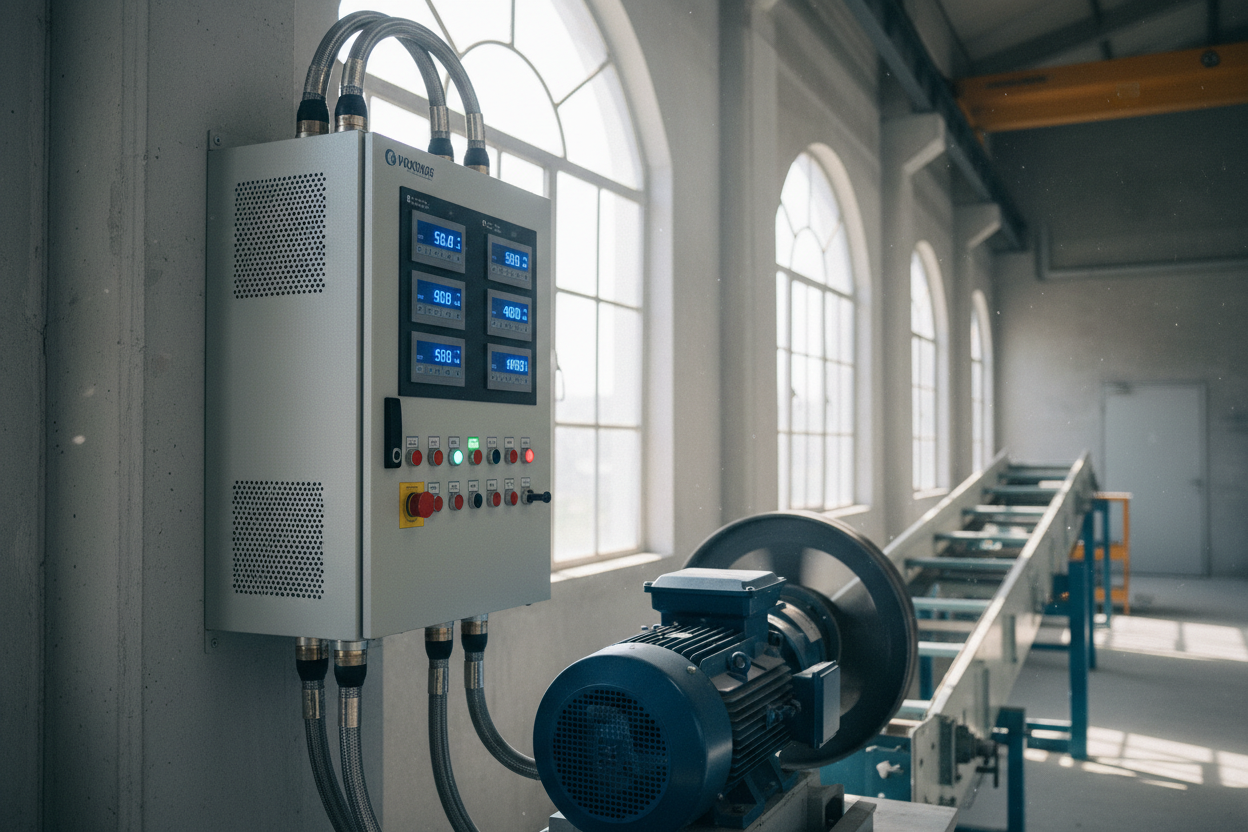
How VFDs Work: A variable frequency drive converts fixed-frequency AC into controllable power. Inside, a rectifier produces DC, a DC bus stabilizes energy with capacitors, and a PWM inverter creates a variable-frequency, variable-voltage output. By adjusting frequency, the VFD directly sets motor speed; by managing voltage, it preserves torque according to strategies such as volts-per-hertz or advanced vector control. Benefits include soft start to reduce inrush, energy savings on variable-torque loads, and tight process regulation. Designers must consider harmonics on the supply and mitigate with line reactors or filters when needed. On the motor side, high switching edges can stress insulation and bearings, so inverter-duty motors, dV/dt filters, and shaft grounding may be warranted. When stopping quickly, dynamic braking with a resistor or regenerative options can dissipate or return energy. With proper setup, VFDs deliver smooth, reliable control while lowering mechanical wear and supporting efficient operations.
Controllers and Starters Landscape: Beyond VFDs, classic contactors, overload relays, and packaged motor starters provide simple, robust control where constant speed is acceptable. Across-the-line starting is economical but brings high inrush current and mechanical shock. Soft starters reduce voltage during ramp-up to limit stress, yet they do not regulate speed once running, making a VFD the choice when variable speed or torque control is required. At a higher level, PLCs orchestrate sequencing, safety interlocks, and logic, while motion controllers and servo drives deliver precise positioning for demanding axes. Some drives bundle basic logic, counters, and PID to cut panel complexity, blurring the line between drive and controller. For multi-motor systems, strategies vary: a single VFD with individual contactors for parallel fans, or one drive per motor for independent control and diagnostics. Selecting among these tools depends on process needs, budget, maintainability, and the degree of precision and flexibility the application demands.
Selecting the Right VFD: Proper sizing begins with motor nameplate current, voltage, and power, but application details matter more. Define duty cycle, required overload capability, and whether the load is constant torque or variable torque. Consider thermal limits at low speed, needed turndown, and whether continuous operation at reduced airflow requires an auxiliary fan. Environmental factors drive derating and enclosure rating choices, including temperature, altitude, dust, and moisture. For sensitive environments, review EMC performance and cable practices; long leads may call for dV/dt or sine-wave filters. If rapid deceleration is expected, ensure a brake chopper and resistor or regenerative capability. Evaluate carrier frequency for a balance of audible noise, motor heating, and efficiency. Confirm inverter-duty motor insulation and consider bearing protection. Plan integration needs such as discrete I O, analog references, fieldbus, or safety features like STO. Matching these criteria ensures reliable operation, easier commissioning, and scalable performance.
Control Modes and Feedback: VFDs offer multiple strategies to match application needs. V Hz control is simple and stable for fans and pumps, while sensorless vector improves low-speed torque and dynamic response without feedback. For the highest precision, field-oriented control with encoder feedback delivers accurate torque and speed regulation under varying loads. Many drives include embedded PID to maintain pressure, level, or flow by comparing a process variable to a setpoint and adjusting motor speed automatically. Careful configuration of ramp times and S-curve profiles reduces mechanical shock and fluid hammer. Features like slip compensation, torque limit, flying start, and catch a spinning load enhance continuity and protect equipment during transients. An autotune routine refines motor models for better performance, while custom logic maps I O and events to application behavior. Selecting the right mode and tuning parameters unlocks smooth control, energy efficiency, and predictable responses across diverse motor tasks.
Commissioning and Maintenance: Effective commissioning starts with correct wiring, grounding, and shielding to minimize noise and ensure safety. Verify phase rotation, set motor nameplate data, and run autotune if available. Use guided parameter wizards to configure accel decel, limits, I O, and PID loops. Save parameter sets and back them up for fast recovery. Test at no load, then under real conditions while monitoring current, DC bus voltage, temperature, and feedback signals. Review alarms and trip histories to spot configuration gaps. Good thermal management matters, so maintain clearance, airflow, and cleanliness; drives dissipate heat, and internal fans and capacitors age over time. Plan preventive maintenance that includes tightening terminals, inspecting filters, replacing fans, and evaluating capacitors based on operating hours and temperature. Keep spares, document revisions, and consider controlled firmware updates where appropriate. Consistent attention to detail during setup and maintenance prevents nuisance trips, extends asset life, and stabilizes production.
Safety, Integration, and Troubleshooting: Prioritize safety with lockout tagout, proper emergency stop design, and features like safe torque off for functional risk reduction. Coordinate short-circuit protection, grounding, and upstream devices to match available fault currents and minimize arc flash risk. For integration, choose reliable I O and networks such as Modbus, EtherNet IP, or Profinet, and configure timeouts so the system reacts predictably to communication loss. Apply basic cybersecurity practices by managing access, using strong credentials, and disabling unused services. When issues arise, check parameter mismatches, wiring, motor insulation, and EMC grounding. Common problems include overcurrent, overvoltage, earth leakage, nuisance trips from noise, or overheating from poor ventilation. Use trend logs and diagnostics to pinpoint root causes, and verify settings like ramps, PID gains, and torque limits. A disciplined checklist, clear documentation, and robust commissioning standards turn complex motor systems into stable, efficient, and maintainable assets.