How Electric Motors Work: From Coil to Motion
From a current-carrying coil to continuous rotation, explore the magnetic forces, commutation, and control methods that make modern electric motors work.
Electromagnetism in Motion
Electric motors turn electrical energy into mechanical work by harnessing electromagnetism. When current flows through a coil of wire, it creates a magnetic field that interacts with either permanent magnets or another energized winding. The result is a Lorentz force acting on the conductors, producing torque around a shaft. Arrange multiple coils around a core and you concentrate this effect, directing the force where it can do the most useful work. Continuous rotation depends on commutation, the controlled switching of current so the magnetic fields keep pulling and pushing in a rotating sequence. Designers consider the right-hand rule to orient current and magnetic field for maximum torque. As the rotor spins, it generates back EMF, a voltage opposing the supply that naturally limits current and shapes the motor's torque-speed behavior. This elegant interplay—current, field, and motion—explains why motors are reliable, scalable motors solutions for everything from precision instruments to heavy industrial drives.
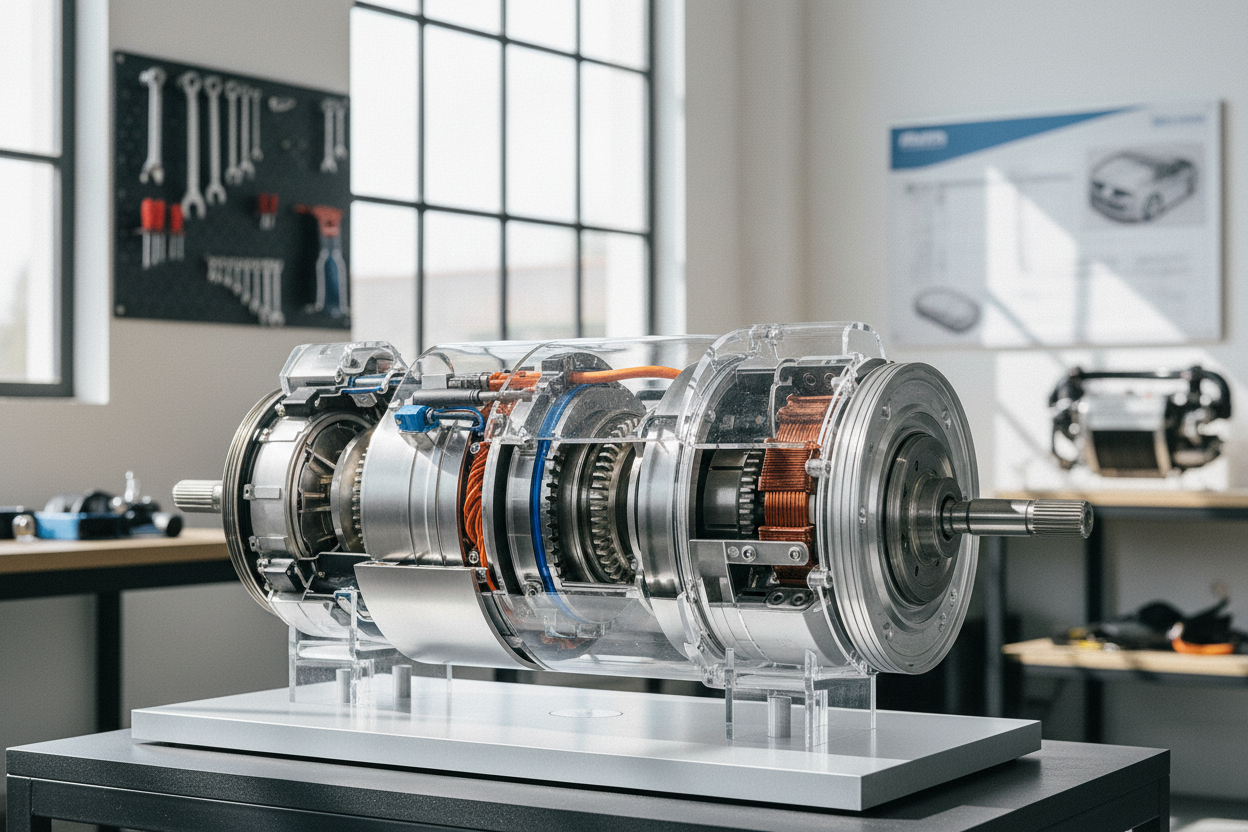
Inside the Motor: Key Components
At the heart of most motors are the stator and rotor. The stator is the stationary part, typically built from laminated steel with slots that hold windings; the rotor is the rotating assembly, carrying conductors or permanent magnets and connected to the shaft. The thin lamination stack reduces eddy currents, lowering heat and improving efficiency. A carefully controlled air gap between stator and rotor balances magnetic coupling with manufacturing tolerance and noise. Bearings support the shaft for smooth rotation, while the enclosure manages cooling and protects components from dust and moisture. In brushed designs, a commutator and brushes route current to spinning coils; in brushless designs, solid-state inverters and sensors take over the switching duty. Rotor types vary: squirrel-cage bars for induction, surface or interior magnets for synchronous machines, and wound fields in specialty designs. Every part—from wire gauge and slot geometry to insulation class—affects torque density, losses, and lifespan.
Brushed DC: Simple Power to Torque
Brushed DC motors are intuitive and rugged, converting direct current into steady torque with minimal electronics. The commutator mechanically switches current through the armature windings as the rotor turns, keeping the magnetic fields aligned to sustain rotation. Brushes made from carbon or composite materials press against the commutator, conducting current while allowing motion. This simplicity brings predictable control with basic voltage adjustment, delivering characteristic torque-speed behavior: high torque at low speed, decreasing as back EMF rises with rpm. Key parameters include stall torque, no-load speed, and efficiency, all shaped by winding resistance, magnetic strength, and friction. Trade-offs are inevitable: brushes wear and generate electrical noise, while commutator segments require precision to minimize arcing and heat. Still, for applications demanding straightforward control, quick starts, and compact packaging, brushed DC remains a foundational motors option, often serving as a cost-effective solution where maintenance access is easy and duty cycles are well understood.
AC Machines: Induction and Synchronous Operation
AC motors excel at durability and efficiency, especially in continuous-duty roles. Induction motors create a rotating magnetic field in the stator that induces current in the rotor, producing torque with a small speed difference called slip. The common squirrel-cage rotor is robust and low maintenance, favored for pumps, fans, and compressors. Synchronous motors, particularly those with permanent magnets (PMSM), lock rotor speed to the electrical frequency, offering high power factor, strong torque density, and excellent controllability when paired with an inverter. Three-phase supplies yield smooth torque, while modern variable frequency drives adjust speed by modulating frequency and voltage. Designers choose between induction and synchronous based on starting behavior, efficiency, and cost. Induction wins for simplicity and ruggedness; PMSM shines where precision, compact size, and peak efficiency matter. Both rely on optimized stator windings, tight air gaps, and careful thermal paths to turn alternating currents into reliable rotational motion.
Control, Sensing, and Efficiency
Advanced control elevates motors from simple spinners to high-performance actuators. Pulse-width modulation (PWM) regulates average voltage and current, enabling smooth speed control and reduced heat. For brushless and AC synchronous machines, field-oriented control (FOC) decouples torque and flux, maximizing efficiency and dynamic response. Position feedback via Hall sensors, encoders, or resolvers ensures precise commutation and speed regulation; sensorless techniques estimate rotor position from back EMF or model-based observers. Performance hinges on managing losses: copper losses in windings, iron losses from hysteresis and eddy currents, and switching losses in power electronics. Techniques like high-silicon laminations, skewed slots, optimized slot-pole combinations, and careful magnet placement reduce torque ripple and cogging. Winding choices—distributed vs concentrated, star vs delta—tune voltage, current, and thermal behavior. Good thermal management through conduction paths, airflow, and materials prevents hotspots, safeguarding insulation and sustaining long-term performance.
Design Trade-offs and Real-World Motion
Selecting a motor means balancing torque, speed, size, cost, acoustics, and efficiency. High torque density favors strong magnets, tighter air gaps, and robust cooling, while reliability rewards conservative temperatures and quality bearings. Operating profile matters: duty cycle, starts and stops, and ambient conditions shape sizing and thermal design. Enclosures and IP ratings protect against contaminants; dynamic balancing, stiff frames, and optimized slot geometry reduce noise and vibration. Maintenance varies: brushed machines need periodic brush and commutator care; brushless systems shift complexity to electronics but gain longevity. Drives with regenerative capability can harvest energy during deceleration, improving system efficiency. From small actuators to industrial workhorses, the same electromagnetic principles apply, scaled and tuned to task. Thoughtful integration—power supply, controller, gearing, and cooling—turns elegant physics into dependable motion, delivering the right mix of responsiveness, efficiency, and service life for diverse applications in the world of motors.