Desk to Dynamic: Staying Active at Work
Make the office move: quick stretches, microbreaks, posture tweaks, walking meetings, and habit cues that turn sedentary days into focused, energetic work.
Why Movement Matters
Long stretches of sitting can feel productive, yet the body thrives on movement. Gentle, regular activity supports circulation, fuels metabolism, and helps maintain posture that keeps muscles and joints happy through the day. Staying active at work is not about grueling workouts; it is about weaving movement snacks into routines so energy, focus, and mood remain steady. Even small bursts of activity can lower stiffness, reduce stress, and sharpen cognitive performance for tasks that demand attention. When you treat movement like any other essential tool, you avoid the slow creep of sedentary habits that strain the back, hips, and neck. Think of a typical day as a sequence of opportunities: a call becomes a short walk, a document review invites a stretch, a break prompts a few squats. By reframing the workday around intentional motion, you sustain overall health, protect musculoskeletal well-being, and build stamina that carries you from desk to dynamic with confidence and consistency.
Ergonomic Foundations
Before adding more steps, build a strong base with thoughtful ergonomics. Adjust your chair so hips and knees are level, feet rest flat or on a footrest, and the lower back maintains a gentle neutral spine. Keep the monitor at eye height, an arm's length away, to reduce neck strain and squinting. Place the keyboard and mouse close, allowing elbows to rest near the body and wrists to stay neutral. Small changes in alignment can prevent tension from accumulating in the shoulders and forearms. Layer in micro-breaks every so often to reset posture: relax shoulders, lengthen the spine, and take a slow, deep breath. Consider dynamic sitting by occasionally shifting positions or using a cushion that encourages subtle core engagement. An ergonomic setup does not replace movement, but it removes friction so active choices are easier. With fewer aches and better support, you will feel more ready to stand, stretch, and walk throughout the day.
Micro-Movements at Your Desk
Short, simple mobility moves keep your body primed without disrupting focus. Practice ankle pumps and calf raises while reading, then alternate with glute squeezes to wake up the posterior chain. For the upper body, roll the shoulders, open the chest with gentle pec stretches, and circle the wrists to ease typing fatigue. Release the neck with slow lateral tilts and rotations, keeping movements smooth and pain free. Use focused breathing to calm the nervous system: inhale through the nose, expand the ribs, and exhale longer than you inhale. Give eyes a break with the 20 20 20 rule by shifting focus to a distant point regularly. Add seated marches, core bracing, and light isometric holds to build endurance for posture. These tiny resets, sprinkled through meetings and emails, reduce stiffness and create momentum for larger activity. Over time, consistent micro-movements reinforce body awareness, prevent overuse, and transform your desk into a space that supports health.
Plan Active Time Into Workflows
Activity becomes reliable when it is scheduled. Anchor movement blocks to existing tasks so they happen automatically: stand during routine calls, take the stairs after finishing a report, and walk a quick loop while brainstorming. Use a time-boxing approach to alternate deep work with short bursts of active recovery, treating movement like a vital performance tool rather than a break you must earn. Map common routes indoors or outdoors for five, ten, and fifteen minute walks, ready to deploy between projects. Keep a shortlist of desk exercises for busy moments and a longer set for slower periods. Prep for success by leaving supportive shoes near the desk, keeping a water bottle handy to encourage hydration, and setting gentle prompts that remind you to move. When activity is built into workflows, you preserve focus, prevent energy dips, and finish the day with steadier mood and less accumulated tension.
Make Meetings Move
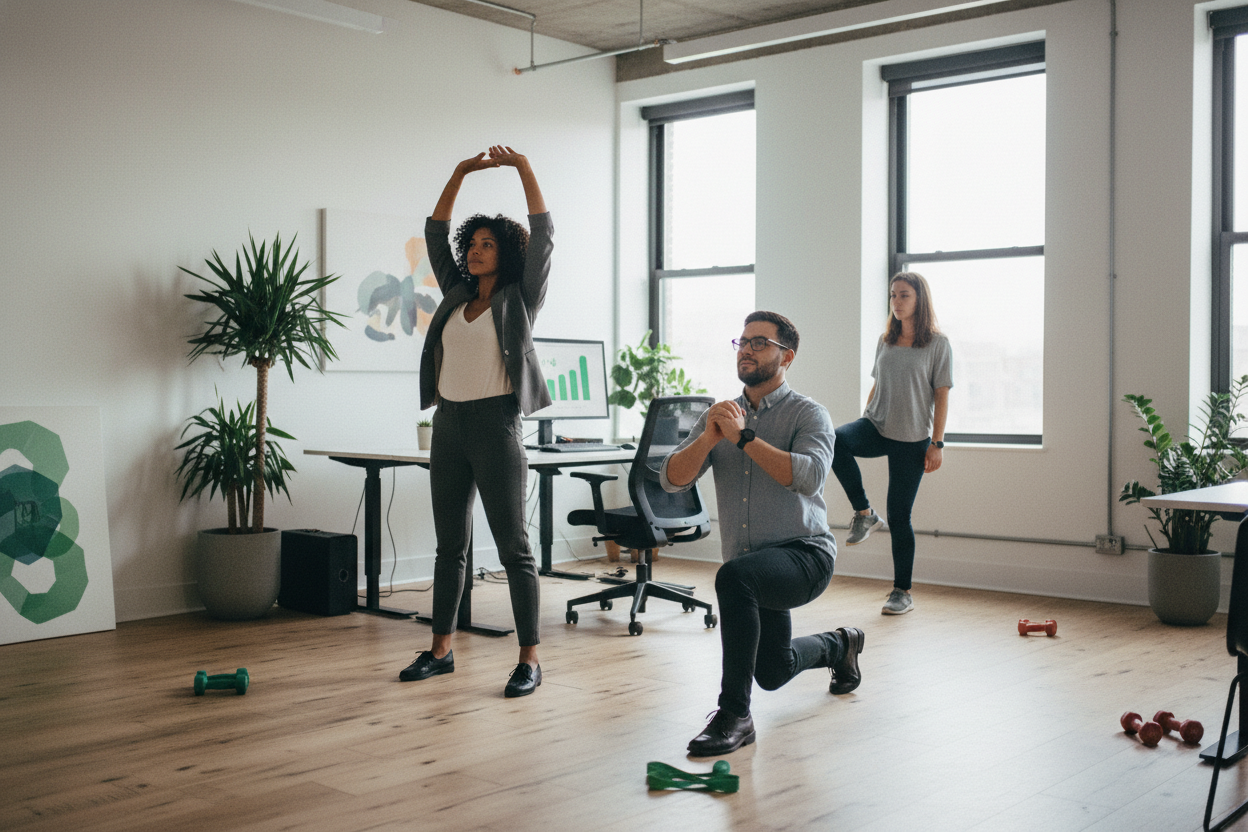
Meetings are prime opportunities to introduce active habits that benefit teams. Try walking meetings for check-ins that do not require screens, or rotate standing huddles to keep gatherings efficient and engaging. Agree on inclusive options so everyone can participate comfortably, offering seated stretches, light mobility, or short posture resets as alternatives. Encourage presenters to weave in one minute of movement after complex discussions to refresh attention and improve retention. For hybrid or remote teams, suggest cameras optional during brief stretch breaks, and share a simple mobility menu that fits narrow spaces. Normalize choosing stairs, pacing while listening, or standing during brainstorming. The goal is not to turn meetings into workouts, but to infuse circulation and variety so ideas stay fresh. When movement becomes part of the group culture, people feel more energized, collaboration improves, and the workday flows with fewer slumps and less stiffness.
Smart Breaks for Body and Mind
Quality breaks are strategic, not indulgent. Combine mobility, breathing, and mindful recovery to reset both body and brain. Start with a short hip flexor stretch, a gentle thoracic rotation, and a hamstring hinge to counter long sitting. Add wrist flossing and finger stretches to relieve keyboard strain. Follow with two slow breaths, inhaling to expand the ribs and exhaling fully to soften the shoulders and jaw. If space allows, perform a set of wall slides or scapular squeezes to open the upper back. Finish with a relaxed walk to boost circulation and give eyes a wider focus. Keep breaks intentional and time bound so you return refreshed rather than distracted. These small resets reduce stress hormones, sharpen focus, and support recovery between demanding tasks. By treating breaks as performance tools, you maintain steady output, protect joints and soft tissues, and finish the day feeling more capable.
Build a Sustainable Culture
Lasting change grows from simple systems and supportive environments. Use habit stacking by pairing movement with existing cues, like stretching after sending a project update or walking during a daily recap. Track consistency with quick notes to reinforce progress and celebrate small wins. Keep essentials within reach, such as a resistance band, a compact footrest, or a cushioned mat for comfortable standing. If adjustable furniture is available, alternate between sitting and standing to vary joint loading and encourage posture shifts. Communicate your plan with colleagues, set respectful boundaries for focused work, and invite others to join a short mobility pause. Embrace a flexible mindset: some days call for brief movement snacks, others for longer walks or a few strength moves. The aim is not perfection but persistence. When you align tools, routines, and community support, active choices become automatic, your health improves steadily, and your workday can truly move from desk to dynamic.