Common Motor Failures and How to Prevent Them
Discover common motor failures: overheating, bearing wear, misalignment, voltage imbalance, contamination, and proven steps to prevent downtime.
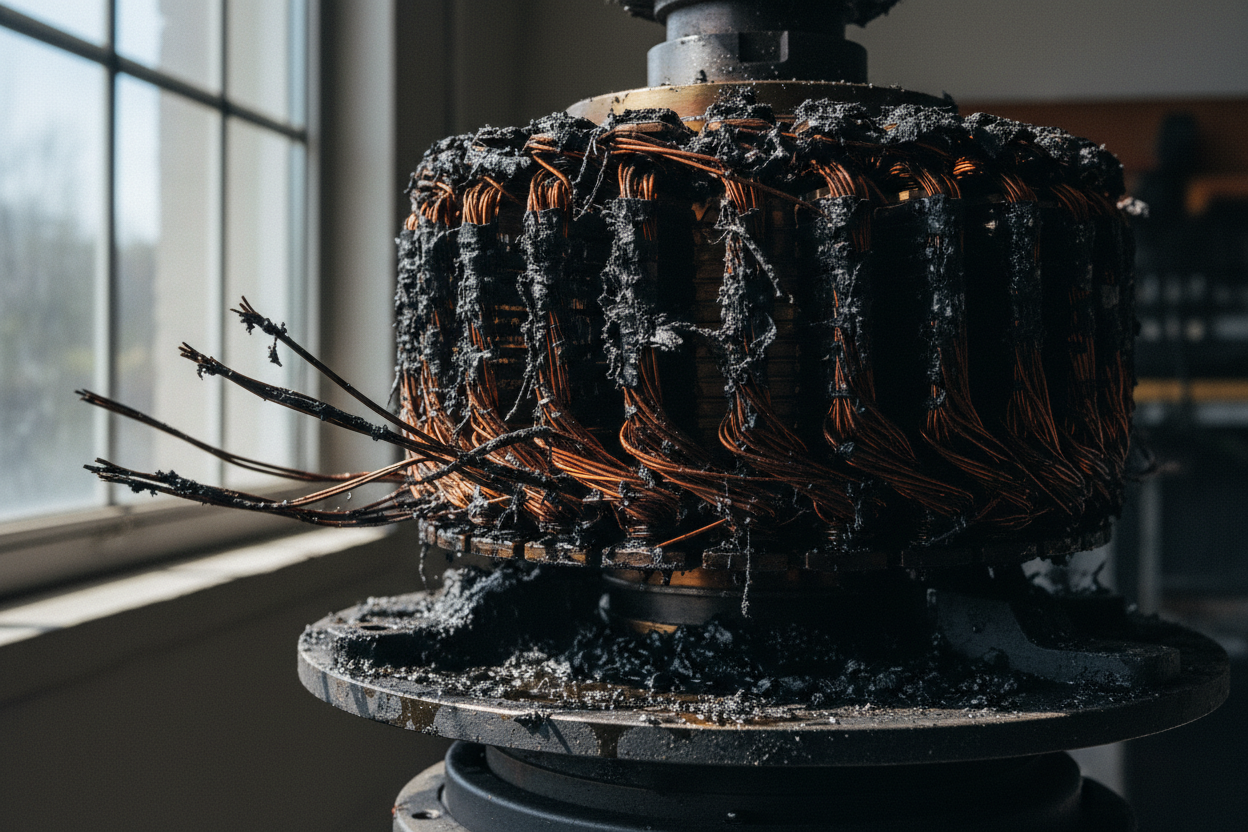
Overheating and Thermal Stress: Overheating is a leading cause of motor failure, often stemming from overloading, poor ventilation, or excessive ambient temperatures. When a motor runs beyond its rated load or duty cycle, winding resistance increases, accelerating insulation aging and reducing efficiency. Blocked air passages, failed cooling fans, or mounting motors in confined spaces also trap heat. In applications with frequent starts and stops, heat accumulates faster than it dissipates. Prevent issues by right-sizing the motor, verifying the service factor, and ensuring unobstructed airflow. Use thermal protection such as embedded sensors or overload relays to trip safely when temperatures rise. If a VFD controls speed, validate that cooling is adequate at low speeds and consider auxiliary fans. Maintain clean housings and heat sinks, and confirm that supply conductors are properly sized to limit I²R losses. Regularly trend temperature data with infrared scans or built-in monitors so you can act before heat-driven insulation breakdown or bearing grease degradation leads to catastrophic failure.
Bearing Wear and Lubrication Issues: Bearings are precision components that suffer when lubrication is incorrect, contaminated, or poorly maintained. Over-greasing can cause churning and heat, while under-greasing increases metal-to-metal contact and wear. Dust, moisture, or process debris infiltrating seals grinds rolling elements and races. Misalignment and improper belt tension add axial and radial loads that exceed design limits, shortening life. Electrical discharge from stray currents can create pitting and fluting, especially with VFD-driven motors. Prevent failures by selecting the correct grease type, viscosity, and NLGI grade, and following interval guidelines calibrated to speed, load, and environment. Use sealed bearings where appropriate, and install shaft grounding or insulated bearings to mitigate electrical damage. Maintain clean grease fittings and tools, and avoid mixing incompatible lubricants. During storage, rotate shafts periodically to redistribute lubricant. Validate mounting fits, avoid hammering during installation, and track bearing condition with vibration and ultrasound monitoring to catch defects early.
Insulation Breakdown and Electrical Stresses: Motor insulation systems degrade from heat, moisture, voltage spikes, contamination, and mechanical stress. Thermal aging embrittles varnish and slot liners, while moisture lowers resistance and fosters partial discharge. Contaminants such as oil mist and dust create conductive films that encourage tracking between turns or to ground. Fast-switching drives produce steep dv/dt edges and reflected wave overvoltages that stress turn insulation. Protect windings by selecting an appropriate insulation class and using surge protection or output filters when pairing with VFDs, particularly on long cable runs. Keep motors dry with space heaters or desiccants and ensure breathers and drains function. Apply proper cleaning methods to avoid forcing liquids into windings. Reduce thermal shock with controlled acceleration and limit high-frequency start-stop cycles when possible. Periodically verify health using megohmmeter tests, polarization index measurements, and, for critical assets, partial discharge or surge comparison testing. Early detection and control of stressors extend winding life and reduce unplanned downtime.
Misalignment, Imbalance, and Mechanical Fit: Shaft misalignment and rotor imbalance amplify vibration, raising temperatures and damaging bearings, seals, and couplings. Angular, parallel, and axial misalignment often result from hurried installations, soft foot conditions, or thermal growth not accounted for in alignment targets. Unbalance arises from uneven rotor mass, damaged fan blades, or buildup on rotors and pulleys. These mechanical issues increase load on bearings, accelerate grease breakdown, and can loosen fasteners. Prevent problems with precise alignment using dial indicators or laser tools, correcting soft foot with proper shimming and verifying base flatness. Choose couplings that suit misalignment capability and torsional characteristics for the application. Balance rotors during overhaul and keep fans clean to avoid mass asymmetry. Confirm belt drives are aligned with correct tension and sheave condition. Establish acceptance criteria for vibration and track trends over time. A disciplined approach to alignment, balancing, and fit-up reduces energy loss, noise, and premature component wear.
Contamination, Moisture, and Environmental Factors: Harsh environments accelerate motor deterioration. Fine dust and abrasive particles invade housings, eroding components and clogging cooling paths. Moisture condenses during temperature swings, reducing insulation resistance and corroding bearings and laminations. Corrosive vapors attack metals and varnishes, while pests and debris obstruct ventilation. Manage these risks by selecting the right enclosure type and IP rating for conditions, such as TEFC for dusty areas or sealed designs where washdowns occur. Use proper gaskets, cable glands, and conduit seals to maintain integrity. Install breathers and drains to control condensation, and consider space heaters in intermittent-duty installations. Keep intakes and fins clean with methods that do not force water into windings. Position motors away from splash zones and shield them from direct process streams. Implement housekeeping routines and filtration where air is recirculated. By controlling ingress, you maintain cooling efficiency and protect bearings and insulation from environmental attack.
Power Quality, Protection, and Starting Practices: Poor power quality stresses motors and shortens life. Undervoltage causes excessive current and heat, while overvoltage drives magnetic saturation and vibration. Phase imbalance or single-phasing creates uneven heating and torque, quickly damaging windings and bearings. Harmonics from nonlinear loads and VFDs add losses, and rapid starts generate thermal and mechanical shock. Protect your equipment with appropriately sized conductors, overload relays, fuses or breakers, and phase-loss or voltage-monitor relays. Where soft starting is beneficial, use soft starters or VFDs with controlled ramp settings, ensuring sufficient cooling at low speeds. Add line reactors, DC chokes, or filters to limit harmonics and steep voltage edges. Verify supply capacity to prevent voltage sag during large motor starts, and coordinate protection to avoid nuisance trips while still guarding the windings. Regularly test and tighten terminations, and inspect contactors for wear. Stable power and correct starting methods reduce thermal cycling, torque shocks, and cumulative insulation damage.
Preventive Maintenance and Condition Monitoring: A structured maintenance program is the best defense against common motor failures. Combine time-based tasks with condition monitoring to act on evidence rather than guesswork. Build checklists that cover cleanliness, airflow, unusual noise, and temperature. Trend vibration to detect imbalance, misalignment, or bearing defects, and apply thermography to identify hot spots in windings, terminations, and bearings. Use ultrasound to pinpoint lubrication needs and motor current signature analysis to expose rotor bar or air-gap issues. Schedule lubrication with the correct product, quantity, and interval, and document every action to refine practices. Standardize installation and commissioning procedures including alignment targets, soft foot removal, and electrical testing. Store spares properly with shaft rotation and humidity control. When problems occur, perform root cause analysis to prevent recurrence. By integrating data, discipline, and training, you extend motor life, reduce energy consumption, and prevent costly outages.