Common Motor Failures and How to Prevent Them
Discover the most common motor failures—overheating, bearing wear, insulation breakdown, misalignment—and proven maintenance steps to prevent downtime.
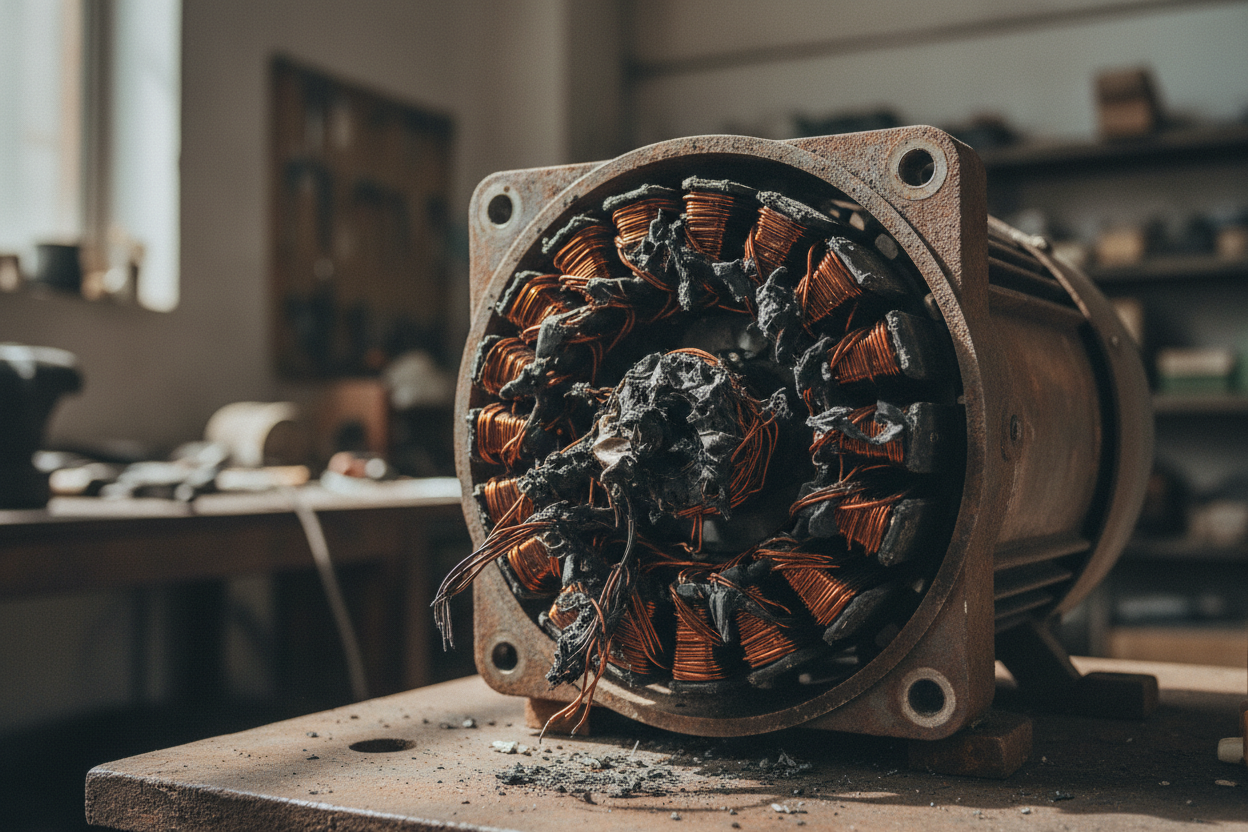
Overheating: Among the most common motor failures, overheating silently shortens insulation life, weakens windings, and accelerates wear on bearings. Causes include overloading, restricted ventilation, improper duty cycle, high ambient temperature, and blocked or failed cooling fans. Dust blankets and clogged fins trap heat, while excessive start-stop cycles prevent adequate cooling between runs. Prevention starts with proper motor sizing for the application and maintaining clear airflow paths around housings and ducts. Add thermal protection such as overload relays, embedded sensors, and smart drives that limit current and flag abnormal temperature trends. Verify voltage balance and phase quality to reduce I2R losses. Inspect and clean cooling paths routinely, confirm fan rotation and integrity, and avoid enclosing motors without adequate ventilation. When using VFDs, configure ramps and current limits to reduce heat during acceleration. Finally, monitor with infrared scans or temperature logging to spot rising baselines early, enabling proactive intervention before insulation damage becomes irreversible.
Bearing Failures: Premature bearing wear remains a top failure driver in motors, often signaled by rising vibration, heat, or tonal noise. Root causes include under- or over-lubrication, contamination, misalignment, shaft currents, incorrect fit, and poor storage practices. Grease starvation leads to metal-to-metal contact, while overpacking creates churning and heat. To prevent issues, specify the correct grease type, quantity, and relubrication interval based on speed, load, and environment. Use sealed bearings or labyrinth seals where contaminants are present, and keep fittings and tools impeccably clean. Address misalignment and soft foot to eliminate side loading, and ensure proper mounting tolerances during assembly. With VFDs, add shaft grounding rings or insulated bearings to mitigate electrical discharge machining. Implement vibration trending and temperature checks to identify early defects, and replace worn seals promptly. Finally, store motors horizontally, rotate shafts periodically, and protect against moisture ingress to preserve bearing integrity.
Electrical Faults: Electrical failures in motors typically stem from insulation breakdown, winding shorts, ground faults, or supply anomalies. Excess heat, voltage spikes, harmonics, contamination, and moisture all degrade insulation over time. Loose connections and undersized conductors elevate resistance and create hotspots. Prevention requires disciplined power quality and protection practices: proper grounding and bonding, surge suppression, balanced phases, and appropriately sized cables and overloads. Conduct periodic insulation resistance and polarization index tests to track aging, and use partial discharge assessments on critical assets. When applying VFDs, consider dV/dt filters, reactors, or sine-wave filters to protect windings, and observe recommended cable types and lengths. Avoid excessive starts per hour and ensure soft starting aligns with mechanical limits. Maintain clean, dry terminal boxes; torque lugs to specification; and document test results to spot trends. Integrating these steps stabilizes current flow, safeguards windings, and extends the electrical health of the motor system.
Misalignment and Vibration: Excess vibration accelerates wear across the entire motor system, often originating from misalignment, imbalance, looseness, or resonance. Angular or parallel misalignment increases coupling stress, elevates bearing load, and reduces seal life. Imbalance from damaged rotors, buildup on fans, or manufacturing tolerances can amplify dynamic forces. Loose base bolts, soft foot, and warped bases introduce instability that compounds over time. Prevention begins with precise installation: ensure flat, rigid foundations, correct soft foot, and use laser alignment tools for tight tolerances. Perform dynamic balancing on rotors and fans, confirm coupling selection and fit, and tighten fasteners to specification. Add vibration monitoring to trend overall velocity and high-frequency acceleration, enabling early detection of faults. Pay attention to resonance by validating operating speeds versus structural natural frequencies. By controlling alignment, balance, and structural support, you cut vibration at its source and significantly extend motor and coupling life.
Contamination and Moisture: Intrusion of dust, moisture, and chemicals damages windings, corrodes components, and compromises lubrication. Fine particulates act as abrasives inside bearings and reduce heat transfer across cooling surfaces. Moisture reduces insulation resistance, leads to tracking, and promotes rust on shafts and cores. Prevention centers on appropriate enclosure ratings and environmental controls: choose TEFC, IP-rated, or washdown designs as conditions demand, and maintain gaskets, drain plugs, and breathers. Use space heaters or controlled storage to prevent condensation during idle periods, and consider desiccants or purged enclosures in humid settings. Install filtration on intake paths, schedule regular cleaning, and avoid pressure washing near seals and vents. Establish robust preventive maintenance routines with visual checks, thermography, and insulation testing. Proper handling during transport and storage, clear labeling, and disciplined cleanliness at every stage reduce contamination risks and keep motors reliable throughout their operating life.