Common Motor Failures and How to Prevent Them
Learn the causes of overheating, bearing wear, insulation breakdown, misalignment, and voltage issues—and proven steps to prevent costly motor downtime.
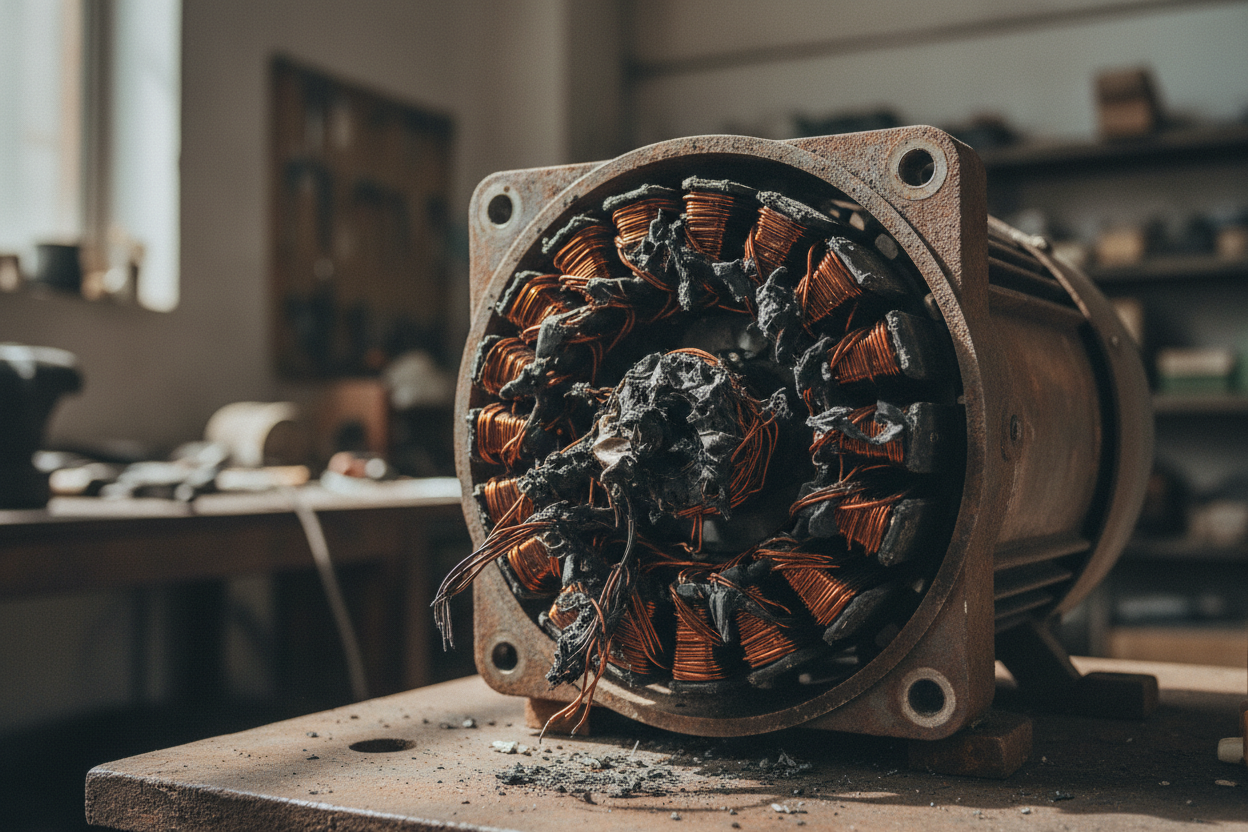
Overheating and Thermal Stress: Overheating is one of the most common causes of premature motor failure. Excess heat accelerates insulation aging, dries out lubricants, warps components, and reduces efficiency. Typical drivers include overloaded duty, restricted airflow from dust-clogged vents, obstructed cooling fan blades, high ambient temperatures, and incorrectly set enclosures. Even short periods above the designed temperature rise can accumulate damage. Prevention starts with correct sizing: match the load and duty cycle to the motor's continuous rating, not its momentary capability. Keep ventilation paths clear; schedule routine cleaning of housings, filters, and cooling fins. Use thermal protection such as embedded sensors, thermostats, or smart relays to trip before damaging temperatures are reached. Verify supply voltage is within nameplate tolerance to avoid excess current draw. For demanding applications, consider derating or selecting a higher service factor. Monitor temperature trends with infrared scans or data loggers; a slowly rising baseline often signals underlying friction, contamination, or winding issues. Consistent preventive maintenance and disciplined operating practices dramatically cut heat-related failures.
Bearing Wear and Lubrication Mistakes: Bearings support the rotor and keep mechanical losses low, so their health largely determines how long motors run reliably. Failures often stem from improper lubrication—too little causes metal-to-metal contact; too much churns and overheats. Contamination from dust, moisture, or process chemicals degrades grease and pitting begins. Misalignment or belt over-tension adds axial and radial loads that exceed design limits. When motors are controlled by drives, circulating shaft currents can create electrical fluting on raceways. Prevention focuses on precision and cleanliness: use the correct grease type and quantity, follow intervals based on speed, load, and environment, and purge old grease without blowing seals. Install effective seals and breathers, and store spares in dry, clean conditions. Align couplings and sheaves accurately, verify belt tension, and eliminate soft foot. For drive-fed machines, use insulated bearings or a shaft grounding brush to divert current. Track bearing condition with vibration analysis, ultrasound, and temperature trending to catch problems early.
Insulation Breakdown and Contamination: Electrical insulation protects windings from short circuits and ground faults, but it degrades when stressed by heat, moisture, chemicals, and electrical surges. Condensation inside the frame lowers resistance and promotes tracking. Abrasive dust and oil films create conductive paths that defeat insulation. Rapid voltage rise from some drives can cause partial discharge on long cable runs. Loose connections produce hot spots that crack varnish and embrittle conductors. Prevention combines protection and verification. Keep enclosures sealed to the appropriate ingress rating, manage humidity with space heaters where needed, and avoid washing practices that force water into windings. Use surge protection and, for long leads, consider output filtering to tame steep dv/dt. Choose the correct insulation class for expected temperature rise and duty. During outages, perform insulation resistance and polarization index tests to confirm health trends. Maintain tight, clean terminals with proper torque, and keep the interior free of oil and dust. These measures extend winding life and reduce sudden electrical failures.
Misalignment, Imbalance, and Harmful Vibration: Excess vibration accelerates wear across bearings, couplings, and seals while increasing energy consumption and noise. Common culprits include angular or parallel misalignment between motor and driven equipment, rotor imbalance from uneven mass distribution, soft foot that distorts the frame, and structural resonance from flexible bases. Symptoms range from elevated vibration at specific frequencies to hot bearings and premature coupling wear. Prevention begins with a solid foundation: ensure mounting surfaces are flat, rigid, and free of looseness. Correct soft foot with measured shimming, then perform precision shaft alignment—dial indicators work, but laser alignment streamlines accuracy and documentation. Balance rotors and fans after repairs or buildup. Use quality flexible couplings and set them within allowable limits. If resonance is suspected, adjust operating speed ranges or stiffen the structure. Continuous condition monitoring—vibration, temperature, and current signature analysis—helps isolate root causes and verify the effectiveness of corrective actions.
Power Quality, Starting, and Protection Settings: Even a well-built motor struggles when the electrical supply and controls are poorly managed. Voltage imbalance causes unequal phase currents, overheating, and torque pulsations. Sustained undervoltage drives higher current and heat; overvoltage stresses insulation. Harmonics from non-linear loads and drives increase losses and noise. Frequent starts, rapid reversals, or long acceleration times elevate thermal stress beyond the duty cycle. Misapplied overload relays, contactors, or protection settings either nuisance-trip or fail to act in time. Prevention requires disciplined engineering: size conductors and protection to nameplate full-load amps, set overloads correctly, and include phase-loss and under/overvoltage protection. Improve power quality with line reactors or filters where harmonics are high, and keep feeder lengths and grounding practices sound. Use soft starters or properly tuned VFDs to control inrush and ramp rates. Tighten and inspect terminals regularly—thermography can reveal hot connections—and document control logic so operators avoid harmful routines that shorten motor life.