Brushless vs Brushed Motors: Key Differences
Understand how brushless and brushed DC motors differ in efficiency, lifespan, maintenance, cost, control complexity, noise, and ideal uses.
Core Operating Principles
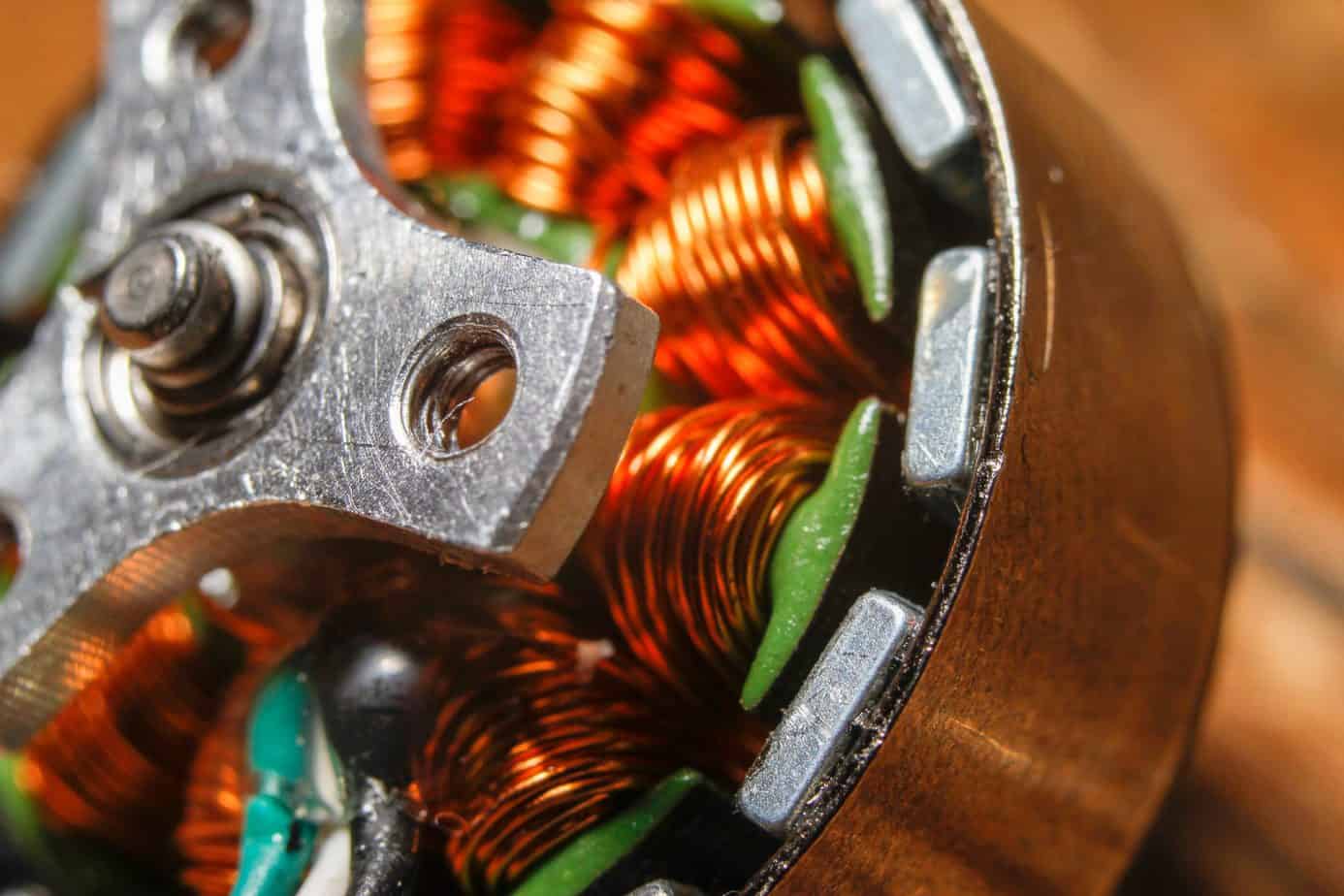
Brushed and brushless motors convert electrical energy into mechanical motion, but they do it in notably different ways. A brushed DC motor uses a mechanical commutator and brushes to route current through windings on the rotor, creating a magnetic interaction with the stator field that produces torque. The sliding contact introduces friction and electrical arcing as the commutator switches segments during rotation. A brushless DC motor, by contrast, places the windings on the stator and permanent magnets on the rotor, and relies on electronic commutation. An ESC (electronic speed controller) sequences current through stator phases using Hall sensors or back EMF feedback to maintain the correct magnetic alignment. Eliminating brushes removes a wear mechanism and allows smoother switching profiles, broader speed ranges, and more precise control. These architectural choices drive differences in efficiency, power density, thermal behavior, noise, and maintenance requirements, shaping which motor type best fits a given application.
Efficiency and Performance
Efficiency hinges on where and how losses occur. In brushed motors, there are losses from brush contact resistance, friction at the commutator interface, and energy dissipated as sparks during switching. Heat often concentrates in the rotating armature, which is harder to cool effectively. Brushless motors reduce mechanical losses by removing brushes and shifting windings to the stator, enabling better heat sinking and lower copper losses at sustained loads. Modern commutation strategies minimize torque ripple and strengthen partial load performance, supporting higher power density for a given frame size. While brushed designs can deliver robust starting torque and a friendly linear response to voltage, brushless systems typically achieve superior efficiency across a wider speed range, especially under variable duty cycles. The net effect is more usable torque per unit of input power, improved runtime in battery-powered gear, and a cooler-running motor. For applications where energy consumption and thermal headroom are critical, brushless architectures often hold a decisive advantage.
Maintenance and Lifespan
The presence or absence of brushes dominates maintenance profiles. Brushed motors involve consumable components that wear with use, influenced by load, speed, and environmental contaminants like dust and moisture. Brush wear can lead to increased commutator arcing, electrical noise, and performance drift, prompting scheduled service intervals for cleaning and replacement. Bearings also require attention, and radiant heat from the rotor can accelerate lubricant breakdown if cooling is inadequate. Brushless motors eliminate brush wear entirely, leaving bearings as the primary mechanical wear items. With windings on the stator, they shed heat more efficiently, slowing thermal aging of insulation and extending service life. In sealed or harsh environments, the absence of sparking makes brushless designs more reliable and safer, reducing debris generation and requiring fewer interventions. Over time, lower downtime, fewer spare parts, and more consistent performance translate to a longer practical lifespan, particularly where continuous or high-cycling operation is expected.
Control and Complexity
Controlling a brushed DC motor is straightforward: apply voltage for speed, reverse polarity for direction, and use PWM for finer speed control. This simplicity makes integration fast and costs low. Brushless motors require an ESC to perform electronic commutation, selecting which stator phases to energize and when. The controller may use Hall sensors for position feedback or run sensorless by monitoring back EMF. More sophisticated strategies such as field-oriented control (FOC) or sinusoidal commutation can deliver smoother torque, higher efficiency, and better low-speed behavior, but they add firmware and tuning considerations. Startup under heavy load, rapid transients, and regenerative braking all require careful control loop design in brushless systems. The trade-off is clear: brushed motors favor plug and play simplicity, while brushless motors reward complexity with precision, adjustability, and advanced features like soft start, current limiting, and field weakening, enabling optimization for specific duty cycles and performance targets.
Cost and Accessibility
Budget decisions often balance upfront cost against total cost of ownership. Brushed motors are typically less expensive to purchase and can run with minimal electronics, which appeals to simple mechanisms, prototypes, and low-volume builds. However, recurring costs for brushes, periodic service, potential downtime, and higher energy consumption add up over the product life. Brushless solutions include the price of an ESC, possible sensors, and integration effort. Even so, the resulting gains in efficiency, reliability, and thermal performance often reduce operating expenses, particularly in battery-powered or around-the-clock systems. As integrated driver modules and compact control boards become more accessible, the barrier to brushless adoption continues to shrink. For small, infrequent-use devices where initial price dominates, brushed can remain a sensible pick. For scaled production, extended warranties, or energy-sensitive deployments, brushless tends to deliver stronger value over time.
Noise, Heat, and EMI
Mechanical commutation introduces both acoustic noise and electromagnetic interference (EMI). In brushed motors, the brush-commutator interface produces audible whine and broadband electrical noise due to sparking, which can disturb nearby electronics without proper filtering and shielding. Heat generation occurs inside the rotating armature, making thermal paths to the outside less direct and sometimes limiting continuous torque. Brushless motors avoid arcing, run quieter, and confine heat to the stator, where it can be more easily coupled to a chassis or heatsink. Carefully designed commutation profiles minimize torque ripple, reducing vibration and improving overall sound quality. EMI is still a consideration due to switching electronics, but it is typically easier to manage with layout, cabling practices, and filters. The result is a cleaner, cooler system with predictable thermal behavior, an important consideration in compact enclosures, sensitive instrumentation, and environments with strict emissions requirements.
Choosing the Right Motor
Selecting between brushless and brushed motors starts with application priorities. Map requirements for torque, speed range, duty cycle, efficiency targets, size and weight, noise limits, and budget. Brushed designs shine when you need simple wiring, quick setup, and acceptable performance for intermittent tasks or cost-constrained builds. Brushless designs excel when long service life, precise control, low noise, and high power density are desired, especially in battery-driven systems, robotics, drones, HVAC fans, conveyors, and high-performance tools. Think holistically: consider the controller, thermal strategy, EMI constraints, and maintenance plan alongside the motor itself. If the system benefits from advanced features like closed loop speed regulation, regenerative braking, or tight torque control, the brushless path usually pays off. If the goal is to move a load reliably with minimal electronics, a well-sized brushed motor can be the most direct solution. Align the choice with lifecycle costs and performance metrics, not just initial price.