3 min read
51 Views
Editorial Staff
Risks of Lower back surgery
Most people consider lower back surgery as the last option after all other treatment procedures have offered no relief. Even [...]
M
ost people consider lower back surgery as the last option after all other treatment procedures have offered no relief. Even in such drastic solutions for the desperate measures, back surgery may not provide any significant improvement.
Generally, the risks associated with back surgery are low. However, to some people, the risks can be serious.
Having knowledge about back surgery beforehand is very helpful because it offers you with a good understanding basis of the risks and benefits and hence decide whether the exercise is a good thing for you or not.
Risks;
A large number of patients who undergo lower back surgery do not suffer any complications either after or during surgery.
Nevertheless, all surgeries bear some level of risk. In general, any back surgery carries the following risks:
Bleeding
Heart attack
Disc herniation
Anesthesia
Nerve damage
Sexual dysfunction
Loss of bowel control
Loss of bladder control
General weakness
Instances of blood clots in the lungs or legs
Reaction to other drugs
Stroke
Some risks might be more pronounced in certain people than in others. The degree of risk suffered will also vary contingent to the type of surgery. As part of the surgeon’s responsibility, he or she should assist you establish your risk should a back surgery be performed on you. The best way to know your personal risk is by having a discussion with your doctor before the operation is carried out.
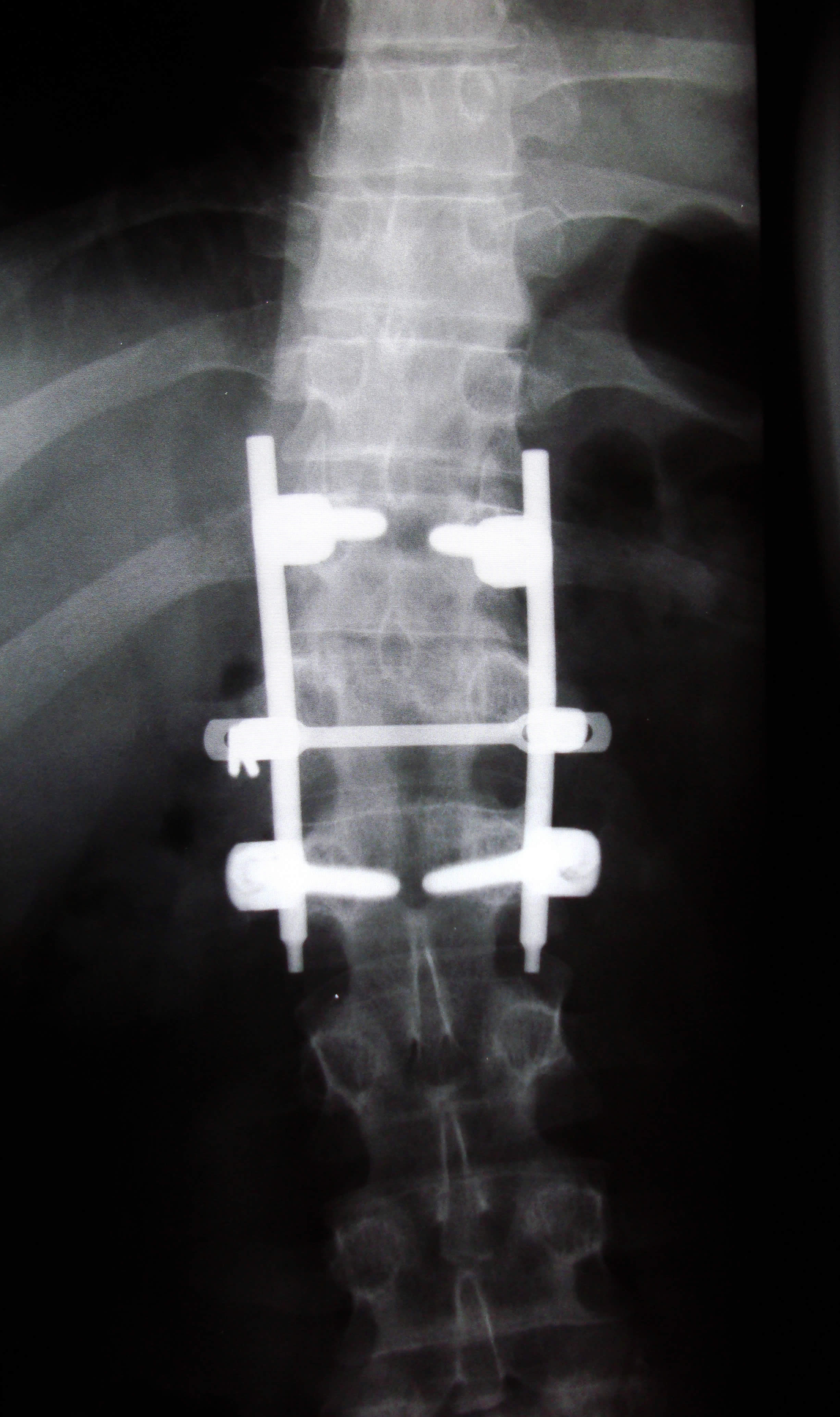
The most common type of back surgery for back pain is spinal fusion. In this surgery, the surgeon joins together vertebrae, otherwise called spinal bones. It is aimed at restricting motion occurring between the bones that constitute the spine. Fusion will also limit nerves from stretching beyond some level.
Risks associated with spine fusion;
Pseudoarthrosis; is the risk that the spinal bones will not fuse together even after the surgery. This risk has however been reduced to about 5 to 10 percent of the surgeries, thanks to modern techniques.
Documents from medical literature indicate that smokers have minimal rate of successful vertebrae fusion.
The risk of pedicle screws; is the risk of the screws becoming loose or breaking and hence necessitating further surgery to rectify the rods and screws.
The risk that the anterior cages and grafts migrate or subside. This will call for a repeat surgery.
Another great risk is the failure to eliminate the symptoms of the lower back pain after the surgery. The rate of this risk stands at less than 20% for all the successful operations. Such an outcome is technically referred to as ‘’failed back surgery syndrome’’.
[photo: www.flickr.com]